Welcome to DU!
The truly grassroots left-of-center political community where regular people, not algorithms, drive the discussions and set the standards.
Join the community:
Create a free account
Support DU (and get rid of ads!):
Become a Star Member
Latest Breaking News
Editorials & Other Articles
General Discussion
The DU Lounge
All Forums
Issue Forums
Culture Forums
Alliance Forums
Region Forums
Support Forums
Help & Search
The DU Lounge
Showing Original Post only (View all)
Abandoned Ghost Towns Across America You Can Actually Visit [View all]
Once bustling with bars, brothels, and bandits, these 14 hamlets are now eerily desolate.https://www.thrillist.com/travel/nation/abandoned-towns-in-america-10-of-most-eerily-ghost-towns
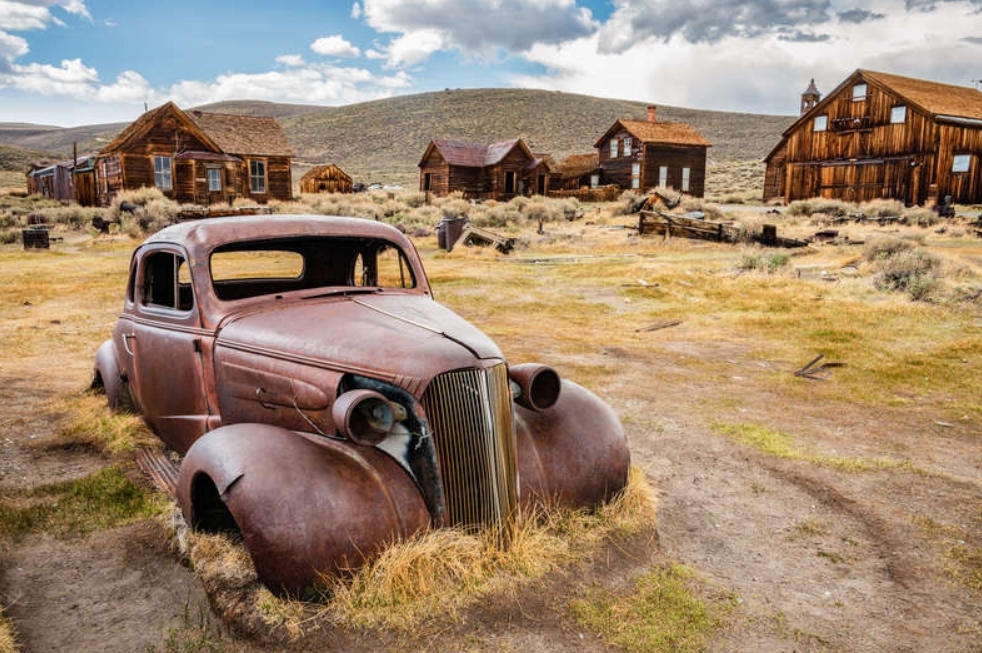
Everyone’s chasing riches in the Land of Opportunity. But when the riches run out, people move on to something newer, shinier, and untapped. It happened to countless boom towns after Gold Rush miners depleted all the gold, and when Gilded Age industrial sites collapsed -- and it’s a big reason why the United States was left with so many abandoned towns in the 19th and 20th centuries. From coast to coast, America’s ghost towns carry the most peculiar backstories. Some began as lucrative mining communities that cleared out almost overnight, and some are casualties of new railways and interstates. Others were once capital cities ravaged by nature and fate. These skeletons of the past could be sets for the next Coen Brothers Western, and at least one has already inspired a chilling horror flick. Hell, some ghost towns are reported to have literal ghosts roaming through the wreckage. Once bustling with bars, brothels, and bandits, these 14 hamlets are now eerily desolate. You can visit most of them today, but be careful what you touch. Many are so perfectly preserved -- furniture, dishes, even beer exactly where it was left -- that they feel like dusty time capsules from a century ago.
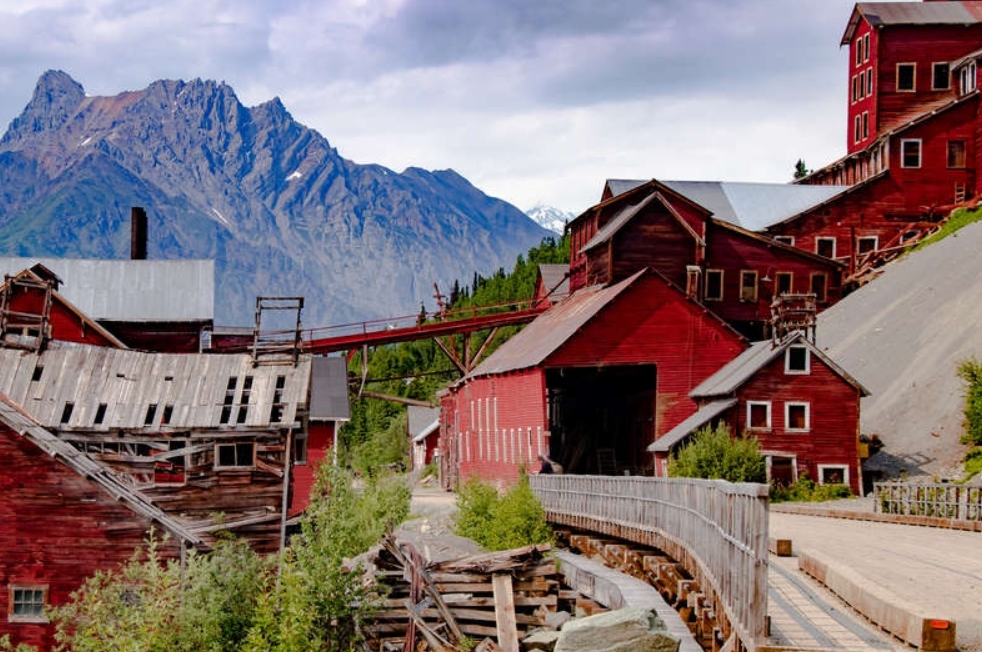
Kennecott, Alaska
All that glitters may not be gold, but it can still make you a fortune. Copper lured brave miners to this remote Alaskan spot in the early 1900s after two prospectors stumbled upon what turned out to be $200 million worth of the metal while resting their horses.
They formed what was then called the Utah Copper Company in 1903. Within a few years, and with the help of J.P. Morgan and the Guggenheims, they turned the place into a self-contained company town, complete with a tennis court and skating rink. One of Kennecott’s five mines contained the world’s richest copper concentration -- they named the claim "Bonanza." By 1938, however, the copper supply was running low enough that the mines shuttered.
Today, it’s a National Historic Landmark -- and one of Alaska’s most popular points of interest -- in the heart of the massive Wrangell-St. Elias National Park, which doesn’t charge an entrance fee. The iconic red mill on the hill spans 14 stories above a glacier and can be explored by visitors who take the official Kennecott Mill Town Tour.
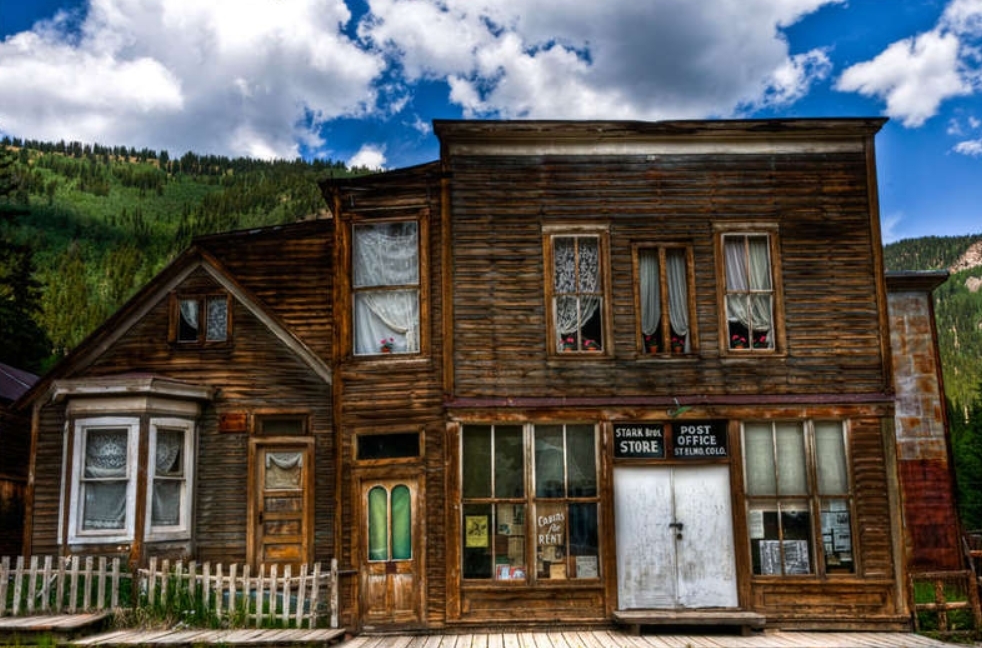
St. Elmo, Colorado
Founded in 1880, St. Elmo was once a highfalutin gold mining town and popular whistle-stop on the Pacific Railroad. It boasted almost 2,000 residents and more than 150 mines -- plus enough hotels, brothels, saloons, and dance halls to keep everybody in town happily cutting a rug. When the Alpine Tunnel closed in 1910, however, the music stopped. With the price of silver already down, the last remaining rail service stopped in 1922. The dedicated few that stuck around suffered another loss 30 years later when the postmaster died and postal service was discontinued, further sequestering them from civilization.
Despite numerous fires charring the canyon over the years, St. Elmo remains one of America’s best-preserved ghost towns. Several original structures are still intact, providing an unfiltered glimpse into life during the mining boom (one big exception is the town hall, which had to be rebuilt in 2008 following a particularly destructive blaze). Present-day visitors can tour the old mining roads in ATVs, fish along Chalk Creek, stay in a historic cabin, and shop from a general store that’s open through the summer. Most tourists stop in during warmer months when St. Elmo comes to life, but some prefer to visit in the wintertime when roads and trails are truly abandoned.
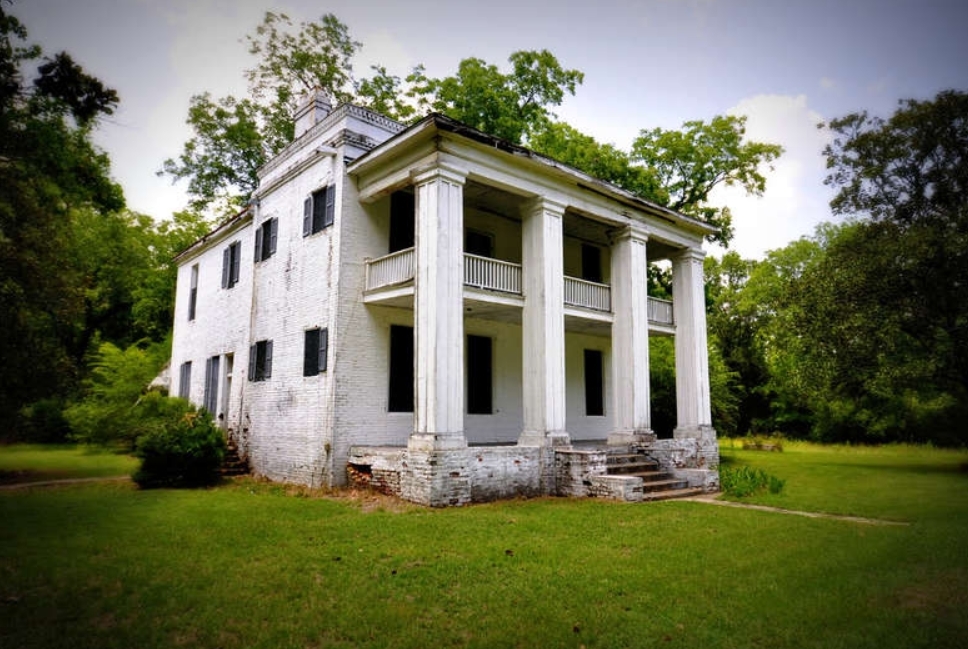
Cahawba, Alabama
Cahawba has an illustrious history for a ghost town: From 1820 to 1825, it served as Alabama’s state capital before flooding so many times that most of the residents fled for drier pastures (and took the title of capital with them). It remained for years a hub of cotton distribution. During the Civil War, it was home of the Confederate Castle Morgan prison, where thousands of Union soldiers were kept between 1863 and 1865 -- when another massive flood started driving people out for good. By the early 1900s, most buildings had been demolished, too.
Still, there’s enough left for history buffs today to enjoy. The welcome center, built in the image of a notable general's cottage, includes a small museum of artifacts and photos from Cahawba’s peak. Guests can take self-guided tours of the major Civil War sites, the cemetery, and a woodsy nature trail; and no visitor should leave without seeing the Crocheron Columns, the only remaining parts of the Crocheron Mansion where important negotiations were made during the Battle of Selma.
snip
15 replies
 = new reply since forum marked as read
Highlight:
NoneDon't highlight anything
5 newestHighlight 5 most recent replies
= new reply since forum marked as read
Highlight:
NoneDon't highlight anything
5 newestHighlight 5 most recent replies
= new reply since forum marked as read
Highlight:
NoneDon't highlight anything
5 newestHighlight 5 most recent replies