Welcome to DU!
The truly grassroots left-of-center political community where regular people, not algorithms, drive the discussions and set the standards.
Join the community:
Create a free account
Support DU (and get rid of ads!):
Become a Star Member
Latest Breaking News
Editorials & Other Articles
General Discussion
The DU Lounge
All Forums
Issue Forums
Culture Forums
Alliance Forums
Region Forums
Support Forums
Help & Search
The DU Lounge
Related: Culture Forums, Support ForumsThe Gold Coast 3 (Ghanaian & Nigerian Cuisine) 🌞
Experience the bold cuisine of Western Africa, unfamiliar spicesand flavors are the rule rather than the exception here.

Plain Light Soup
Nkrakra
Makes 4 to 6 servings
This is a basic recipe for a clear broth based on water (or stock),
tomatoes, chili pepper, onion, and salt, enhanced as desired by
spices (garlic, ginger, herbs, etc.) as well as vegetables, bones,
or a little meat, chicken, or fish. It is a soothing recipe and
considered a good soup for those who are ill or weak. Much
more recently, it is seen as an appropriate soup for a first
course.
Ingredients
3 medium tomatoes
1 medium onion or a few shallots, coarsely chopped
½ to 1 teaspoon dried ground red pepper (or to taste),
or chopped fresh chili pepper equivalent in heat
6 cups water or stock
1 teaspoon salt or seasoned salt (or to taste)
Optional seasonings to taste
2 cloves garlic1-inch piece fresh ginger, coarsely chopped
Chopped herbs like thyme, basil, akoko besa, etc.
Optional ingredients
1 small eggplant or 3 garden eggs, peeled and cut in
large chunks
½ pound meat of choice or chicken cut into chunks;
or fresh fish, skin and bones removed; and/or soup
bones (up to 1 pound)
2 tablespoons tomato paste
Directions
1. Grind the tomatoes, onion or shallots, dried or fresh chili
pepper, and other optional seasonings with 1 cup of water
in an electric blender about 45 to 60 seconds.
2. Pour in a soup pot with 5 cups of water or stock, and salt
to taste and bring to a boil, then lower heat to simmer. If using
soup bones, add them to the pot at this point along with
eggplant and any meat or poultry, if using. Stir in tomato paste,
if desired.
3. Simmer mixture until meat and poultry are tender. (If using
eggplant, remove it when soft; remove the skins and puree in
a blender; return to the soup pot when the meat or poultry is
almost tender.)
4. If using fish, break it into pieces and add to the soup about
15 minutes before serving the soup. Remove any bones before
serving.
To serve: May be served alone or with any preferred starch.
Variations:
Thicken the soup by cooking a starch, like peeled yam or
plantain or potato, and adding some of the liquid in which
the starch was cooked to the soup (or cook the slices right
in the soup).
A little freshly pounded fufu (not the powder version) is also
sometimes added.
Add additional meat, chicken, or fish.
Include smoked fish or ground shrimps as an additional
seasoning.For a vegetarian alternative: use vegetable stock
and add other soft, mild vegetables such as mushrooms or
summer squash.
*************************************************************
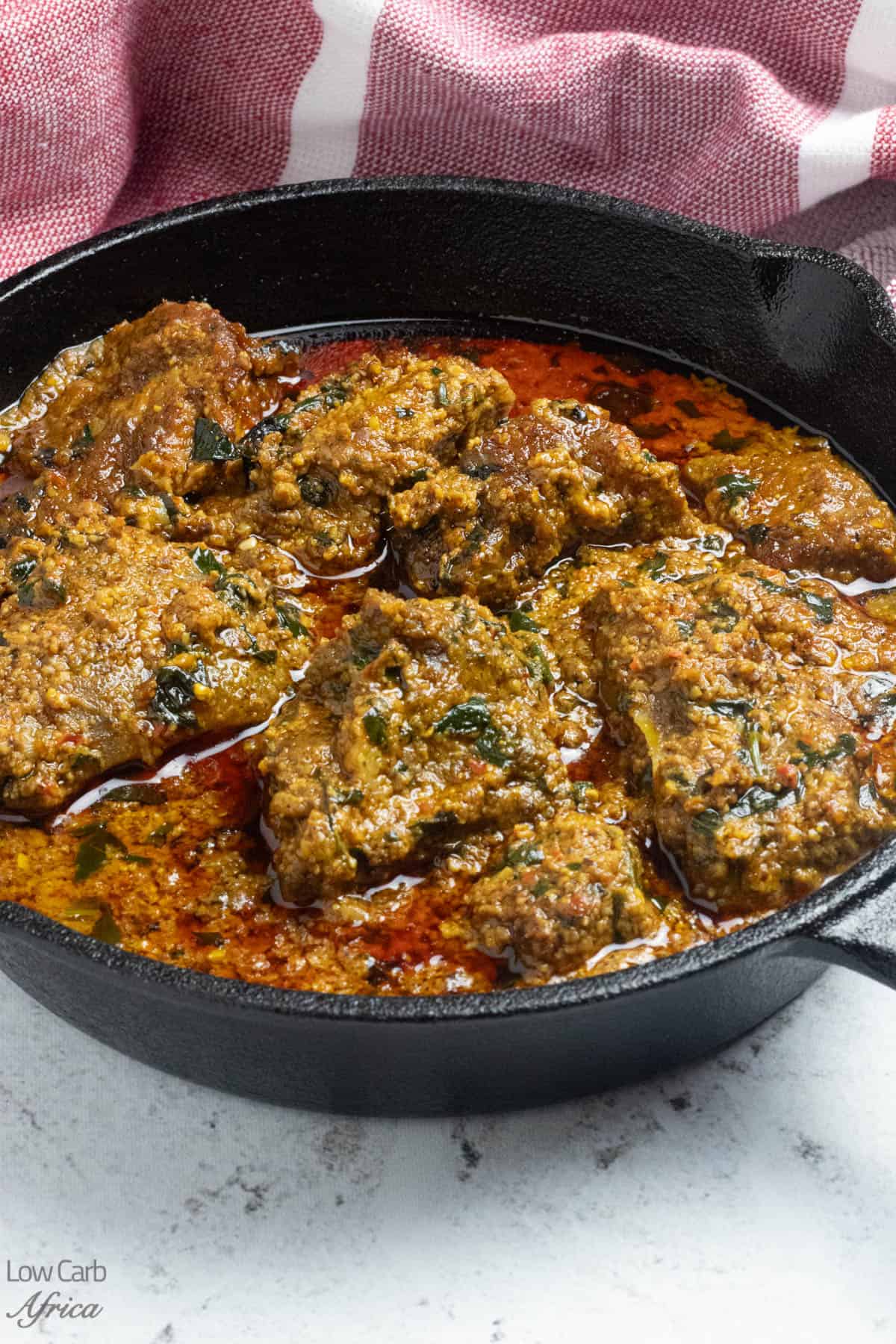
Sesame Soup with Poultry
Makes 4 to 5 servings
Sesame soup is popular in Northern Ghana. While in Tamale
shadowing Mrs. Comfort Awu Akor, we went to the local
outdoor market for ingredients to make ours, including
guinea fowl and sesame seeds. Comfort wanted two specific
types of seeds, but we had to settle for what was available.
Preparations were quite labor intensive. Our Muslim driver
Abdul did the honors of slaughtering the guinea fowl—cutting
its head off after saying a prayer. We boiled water to clean the
fowl and remove its feathers, and cut it into serving pieces.
To prepare the sesame paste we rinsed the seeds, dried and
toasted them, and pounded them into a smooth paste in a
mortar. I have been unsuccessful in duplicating that process
using either a coffee grinder or blender, even with the addition
of sesame oil. Therefore, this recipe substitutes tahini.
Ingredients
4 pounds guinea fowl, Cornish game hens, chicken, or pheasant
1 cup coarsely chopped onion (red if available)
2-inch piece fresh ginger, coarsely chopped
3 or 4 cloves garlic
1 to 3 chili peppers, or to taste (jalapeno for milder, cayenne for
hotter, and habanero for very hot), seeded and stems and
membranes removed to decrease heat, if desired
1½ teaspoons salt or seasoned salt (or to taste)
6 small-to-medium peeled tomatoes or half a 28-ounce can tomatoes
1 cup tahini
Directions
Prepare the poultry:
1. Rinse the poultry (if desired, cut off the end of the tails and
the tips of the wings) and remove any extra fat and loose skin.
Keep the neck but discard the liver. Cut each fowl into serving
pieces: for a quinea fowl or chicken, 8 to 10 pieces; for the game
hens, quarter each (or cut into more pieces if serving to a crowd,
in which case, be fearless and whack away at the bones with a
heavy butcher knife).
2. Put the onion, ginger, garlic, and chili peppers in a blender.
Add just enough water (a tablespoon or two) to grind them into
a paste.
3. Put the poultry pieces into a large heavy pot with a lid, along
with a ½ cup of water and the ground seasoning mixture. Rinse
out the blender container with a little more water and add that,
too, along with the salt. Stir to mix, cover the pot, and heat on
high heat, then reduce to medium to steam the poultry for 10 to
20 minutes.
Prepare tomatoes:
4. If using fresh tomatoes, first drop in boiling water for a
couple of minutes, then in cold water (this loosens the skins).
Remove the skins and then puree the tomatoes in a blender.
If using canned tomatoes, simply drain and puree, adding
about half a cup of the juice from the can as well.
Assemble soup:
5. Once the poultry is steamed, place a strainer over the soup,
and add the pureed tomatoes, straining out the seeds. Add 2
cups of water, pouring it through the strainer, too, to get the last
bit of tomato in the soup. Add an additional 2 cups of water,
bring to a boil, then lower the heat to simmer the soup while
preparing the sesame paste.
6. Mix the tahini (sesame paste) with 2 cups of the soup’s hot
broth in a small saucepan. Cook on medium heat, stirring
occasionally, until the oil begins to separate. Pour mixture into
a blender, using a spatula if necessary.
7. Remove the poultry pieces to another pot and strain the
broth into the new pot with them.
8. Blend the sesame mixture in the blender with a little more
broth if needed. Stir the sesame paste into the soup, rinsing
the blender with broth from the pot, and scraping the dregs
in with a spatula. Adjust the seasonings to taste.
Variations:
Use tomato sauce or paste in place of fresh or canned
tomatoes.
Substitute vegetables for the fowl (use mushrooms,
eggplant, etc.).
Use less tahini for a milder, lighter flavor.
Serve as a first course and garnish with parsley, grated
hardboiled egg, or minced green onions.
Instead of using tahini, toast and grind sesame seeds and
blend them with 1½ cups water in a smoothie maker.
*****************************************************************

Fresh Pepper Sauce
This is Ghana’s salsa. It needs wonderful fresh tomatoes
and chili peppers to do it justice—the good soup (or sauce)
truly comes from the good earth. The “proper” (and easiest
and most efficient) way to make the sauce is using an asanka
and the wooden mashing tool (apotoyewa or apotoriwa). It
can be prepared without them but remember the texture is
very important: one does not want a watery, bland,
uninteresting mess.
When using a clay asanka, scald the asanka with boiling water
before and after use. Barbara Baëta cleans hers using a little
lemon juice as well. For a “red” sauce use red chili peppers, for
a “green” sauce use green chili peppers. The proportions are
flexible. Adjust according to personal preference.
Give almost any homesick Ghanaian one of these simple-to-make
pepper sauces along with a can of sardines or Exeter corned
beef, and some simple gari or a ball of kenkey, and he or she will
likely be deeply comforted.
Ingredients
2 tablespoons minced red or green chili pepper of your choice
(kpakpo shito are used in Ghana, with or without seeds and membranes
1 large onion, chopped
1½ cups chopped fresh plum or other variety tomatoes
1 teaspoon salt or to taste
Directions using an asanka
1. Put the chopped ingredients in the asanka with salt. Using a
rocking motion, crush a little of the ingredients at a time, and
continue working around the bowl until everything is well
mashed, but small pieces still exist, about 10 to 15 minutes.
(A Ghanaian friend/spouse would likely be glad to assist—it
is not as easy as it looks.) Adjust the seasonings to taste.
2. The sauce can now be eaten, but Barbara advises simmering
it over low heat for 15 to 20 minutes to make it less watery and raw tasting.
Directions using a blender
1. Use the same ingredients, but grate rather than chop a
portion of the onions and tomatoes and set them aside
with a little of the minced chili pepper.
2. Very briefly pulse the rest of the ingredients in a food
processor or electric blender, then remove and combine
with the grated ingredients. Adjust seasonings and
simmer over low heat for 15 or 20 minutes if desired.
To serve: Fresh pepper sauces go well with Ghana-style
Grilled Ghana Fried Fish. or eggs. If not eaten immediately,
refrigerate and use within a day or two.
Variation: Substitute red or green sweet bell peppers for
part of the chili peppers if you like less heat
****************************************************************

Chili Pepper and Shrimp Sambal
Shito / Shitor / Shito Din / Mako Tuntum
Traditionally shito (SHE-toe) was as ubiquitous in Ghana
as ketchup is in the U.S. Shito literally means “pepper” in
the Ga language, and can refer to hot peppers or the hot
sauce/condiment itself made from dried peppers, dried
shrimps, and sometimes small dried herrings as well as
onion, tomato, and other seasonings.
When I taught in Nungua, a Ga area, Ga Kenkey
was commonly eaten with shito and fried fish. I have
always assumed that shito is a Ga invention. It is
popular with boarding school students throughout
the country, likely because it pairs well with both
kenkey and gari, filling and inexpensive foods that
do not require refrigeration, along with canned
corned beef or sardines. In Twi, the word for “chili
pepper” is mako, so shito is also called mako tuntum
(black or dark pepper).
The recipe for shito has largely been an oral tradition until
the past 20 years when it started appearing in some
cookbooks. There are now a number of online recipes also.
However, it deeply saddens me to see imported tabasco
sauce frequently replacing shito on restaurant tables in
Ghana.
Making shito is generally a complicated and time-consuming
process, and also produces a strong “fishy” odor while cooking.
Friend and colleague Gloria Mensah, a no-nonsense, efficient
single mom and trained culinary professional skilled at adapting
traditional recipes to the 21st century, sometimes bakes shito in
large batches in her oven and substitutes readily available
canned mackerel for the dried herrings. She has also adapted
the recipe for a slow cooker. A slow cooker has the added
advantage that in nice weather or a covered area it can sit
outside for a day or a day-and-a-half while cooking so the
powerful odor does not permeate the house. Along with
substituting canned mackerel, Gloria also uses ginger paste
and garlic paste from an Indian market to eliminate making them
from scratch. Another time saver is the ability to purchase dried
shrimp from a local international market rather than drying them
in the oven before grinding them. This is a simplified step-by-step
crockpot shito recipe adapted from Gloria Mensah’s version.
Ingredients
1 cup dried shrimp (from a 3.5-ounce/100-gram package)
2 cups canned mackerel (from a 15-ounce/425-gram can)
¼ cup dried ground red pepper (for medium-heat)2 cups
canned Italian plum tomatoes
2 large onions, cut into chunks
¼ cup ginger paste (from pureed fresh ginger or bought)
¼ cup garlic paste (from pureed fresh garlic or bought)
1 tablespoon tomato paste (optional)
1 to 2 cups vegetable oil, such as canola or peanut (not red palm oil)
Directions
Optional Step:
1. Rinse the drid shrimp, blot them dry with a paper towel,
then spread them out on a baking sheet in a 200 degree F
oven for an hour while completing the other prep work.
(Note: I imagine Gloria omits this step.)
Prepare the mackerel:
2. A crucial requirement in making shito is to remove all
water. Dry and blot the drained canned mackerel with paper
towels before flaking it with your fingers. Put the flaked
mackerel in a large bowl and add the ground red pepper.
Prepare tomatoes:
3. Crush the Italian plum tomatoes by lifting the tomatoes
out of the liquid first and then squeezing them through your
fingers into a small bowl. If using already crushed canned
tomatoes, drain off most of the liquid.
Assemble shito:
4. Mix 1 cup of the crushed tomatoes with the mackerel.
5. Blend the second cup of tomatoes with the onions in a
small blender or food processor and add to the mackerel mixture.
6. Grind the dried shrimps in the electric blender and add
them to the mixture. Stir in the ginger paste, garlic paste, and
tomato paste, if using, and finally 1 cup of oil. Add up to 1 cup
more oil for a moister, longer lasting shito.
Cook shito:
7. Put everything in a crockpot, cover and cook on low for
12 to 18 hours, stirring every few hours. The shito is ready
when it is dark brown, but not burned (constant stirring and
pressing is another trick to making shito), and all the water
has cooked out. (This may not always work in the crockpot:
some slow cookers may take longer, or it may need to be
finished in a cast iron or nonstick heavy skillet on a stovetop.
To finish on the stovetop, heat a skillet on medium heat, then
lower to low and stir constantly for 30 to 45 minutes. It will
continue to cook a little in the pan even after it is taken off
the heat.)
8. Allow the shito to cool completely and store in glass jars.
When cooked very dry and covered with a generous coating
of oil, shito keeps well at room temperature.
Variations:
Some Ghanaians skip the mackerel altogether and make
shito using only flaked dried shrimp from Thailand. This
is even easier, but the Thai version has 2 percent sugar
added to the dried shrimp.
A vegetarian family locally makes a great shito using
seaweed in place of the dried shrimp and fish.
Many Ghanaians nowadays add shrimp-flavored or other
seasoning cubes to their shito.
If dried shrimp aren’t available, substitute fresh shelled
and deveined shrimp, dried in a slow oven.
Shito can also be cooked uncovered in a slow oven.
Substitute tuna for the mackerel.
If you know any students in North America from Ghana, a
small jar of shito and a little bag of gari would likely make
a far more welcome gift over the holidays than any candy
canes or chocolate chip cookies.
All The Above From "The Ghana Cookbook"
https://www.goodreads.com/book/show/27313468-the-ghana-cookbook
Enjoy!

Out of this world flavors. Mrs. JAP was invited to join her African
co-workers with their version of Thanksgiving, all Ghanaian
dishes and spices. She said it was ALL delicious but words fail
to describe the sheer range of flavors.
Other Gold Coast Posts:
https://www.democraticunderground.com/1157156524
https://www.democraticunderground.com/1157156620
4 replies
 = new reply since forum marked as read
Highlight:
NoneDon't highlight anything
5 newestHighlight 5 most recent replies
= new reply since forum marked as read
Highlight:
NoneDon't highlight anything
5 newestHighlight 5 most recent replies
= new reply since forum marked as read
Highlight:
NoneDon't highlight anything
5 newestHighlight 5 most recent replies
The Gold Coast 3 (Ghanaian & Nigerian Cuisine) 🌞 (Original Post)
justaprogressive
Yesterday
OP

yardwork
(68,766 posts)1. That looks so good!

justaprogressive
(6,112 posts)2. You like spicy?
It's here.
yardwork
(68,766 posts)4. Love it!

debm55
(54,002 posts)3. Oh they all look so wonderful. I don;t know which one to pick. So I would like to try all, especially the one with
Shrimp, Thank you justaprogressive.
