US vaccine advisers say not all babies need a hepatitis B shot at birth
Source: AP
Updated 10:41 AM EST, December 5, 2025
NEW YORK (AP) — A federal vaccine advisory committee voted on Friday to end the longstanding recommendation that all U.S. babies get the hepatitis B vaccine on the day they’re born.
A loud chorus of medical and public health leaders decried the actions of the panel, whose current members were all appointed by U.S. Health Secretary Robert F. Kennedy Jr. — a leading anti-vaccine activist before this year becoming the nation’s top health official.
“This is the group that can’t shoot straight,” said Dr. William Schaffner, a Vanderbilt University vaccine expert who for decades has been involved with ACIP and its workgroups. For decades, the government has advised that all babies be vaccinated against the liver infection right after birth. The shots are widely considered to be a public health success for preventing thousands of illnesses.
But Kennedy’s Advisory Committee on Immunization Practices decided to recommend the birth dose only for babies whose mothers test positive, and in cases where the mom wasn’t tested. For other babies, it will be up to the parents and their doctors to decide if a birth dose is appropriate. The committee voted to suggest that when a family decides not to get a birth dose, then the vaccination series should begin when the child is 2 months old.
Read more: https://apnews.com/article/vaccines-babies-hepatitis-b-10f8db54beb38c5cd39a94f8a3657752
They will be considered "persona non grata" for the next 3 years and state/regional entities will make the policy. They will kill their own MAGats.
REFERENCE - https://www.democraticunderground.com/10143577128
 = new reply since forum marked as read
Highlight:
NoneDon't highlight anything
5 newestHighlight 5 most recent replies
= new reply since forum marked as read
Highlight:
NoneDon't highlight anything
5 newestHighlight 5 most recent replies

snowybirdie
(6,509 posts)Rules for the state differs that from the Kennedy follies. All red states should do that as well.

FarPoint
(14,411 posts)This for any US state that follows the black sheep Kennedy.

BumRushDaShow
(164,314 posts)One in the NE and one out west.

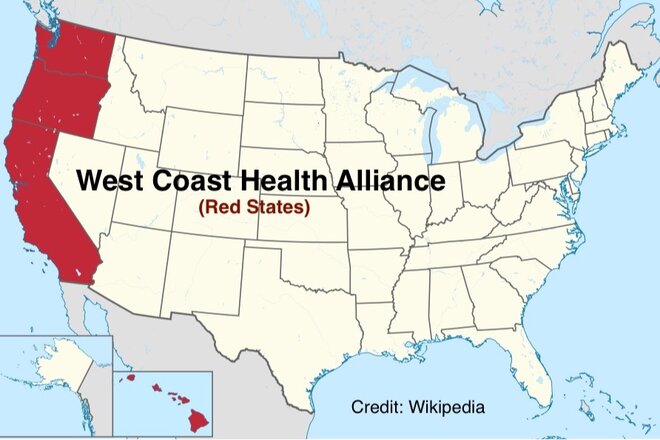
They planned to share/issue medical guidance for participating states.

TheRickles
(3,110 posts)The rate of Hep B infections in newborns is miniscule, except in the subgroup of babies born to drug addicts. So target that high-risk population and not the other 95% of newborns.

biophile
(1,090 posts)
xocetaceans
(4,321 posts)What gives you such confidence in that ability and what about the other numbers of transmission cases? Do you think that those are transmissions are fine, too?
Out of about 3,600,000 newborns per year in the US, how many constitute that minuscule number of transmissions that you too would accept and tolerate as fine? What do you wish on them in lieu of a safe and effective vaccination against such an eminently avoidable disease?
RFK, Jr. is not correct and is wholly unqualified and is pathetically incompetent as the leader of HHS.
biophile
(1,090 posts)It’s a conversation between the doctor and the mother. I don’t think that a blanket requirement to inject newborns with a largely unnecessary vaccine is a good idea. It should certainly be a medical decision based on individual circumstances.
Agree that RFK is unqualified to be head of the agency.
xocetaceans
(4,321 posts). . . to want to follow as policy seems to be unachievable. I wasn't asking you to make a decision: I was asking you to defend the practicality of handling the situation in the way that you seem to want to.
Beyond that, "largely unnecessary" is seemingly a pretty pat way to sweep the whole problem under the rug. Whether it is necessary or not depends on each person's knowledge of their immediate environment and all likely future environments. One mistake in that arena can lead to infection and to disease.
So, what percentage of 3.6 million would you willingly sacrifice yearly on the altar to personal choice you've erected? How many sick kids? Moreover, does this mean that you would be willing to pay for the medical care and coffins that might well result from your policy of 'wait until its too late to prevent the disease'?
Maybe I am taking your position incorrectly, but it seems as if you have an axe to grind against the entire notion of public health. In spite of the fact that we in this country cannot seem to achieve the wisdom or grace to establish universal healthcare for all in this country (and rid ourselves of the "health insurance industry" (rather, the health extortion racket would be a more proper name for them), we are truly in this together. Having a non-discriminatory public health system open to all is a critical part of that. So, if you act against the basic ideas of public health on some epistemically fanciful grounds wishing for some unachievable perfect knowledge to make the choices that you want to arrogate purely to the individual in spite of the lack of risk posed by safe and effective vaccines, you really do not want universal healthcare in this country, but seemingly rather some sort of libertarian hellscape of partial coverage based on preserving personal choice in the face of the needless deaths of others.
But, hey, maybe I am wrong about your position . . . and you're not really a libertarian or a secret anti-vaxxer.
biophile
(1,090 posts)But in the realm of healthcare there is always a trade-off in terms of public good vs. public cost. Having worked in medicine, I saw tremendous waste of resources and funds. Not so much in vaccine administration, but the Hep B shot is probably the one - maybe only example- of an inefficient way to use a vaccine for public health good. I call myself vaccine hesitant- I got the Covid vaccine but only after it had been out for a while and was finally FDA approved. By then I could see which one had the fewest side effects as well.
My dog and horse and cats get the vaccines they need. (My indoor cats do not get all of them as they are not exposed to certain diseases, but the outdoor cats will get more).
The most egregious waste of Medicare funds is in elder care, not vaccines. But there is an incredible profit motive at work in vaccines and pharmaceuticals, so that is a problem and needs to be considered. I guess I’m essentially a pragmatic person who is not sentimental about prolonging life at any cost. I believe in providing comfort and pain remediation but nursing homes and hospitals will definitely pad the billing for unneeded treatments or services, simply because they can bill Medicare.
Anyway, please know that just because a person is not keen on a certain vaccine, it doesn’t make them anti-vax. I was going to get the Zostavax years ago for shingles at age 57 but insurance didn’t cover it and it was about $250. I read the package insert and realized that its efficiency was roughly 60% for my age group so I decided not to pay for a near coin toss. The new one - Shingrix- is much more effective- I can recommend that one.
So I hope you can find it in your heart to see that I am not advocating for a libertarian hellscape, but a reasonable approach to healthcare where decisions are based on medical need, personal circumstances, public good, relative risk and valid scientific evidence.
mainer
(12,470 posts)Their babies will get infected.
It would be terrible to miss them.
deurbano
(2,980 posts)xocetaceans
(4,321 posts). . . gives you such confidence in that ability and what about the other "miniscule [sic]" numbers of transmission cases? Do you think that those are transmissions are fine?
Out of about 3,600,000 newborns per year in the US, how many constitute that minuscule number of transmissions that you would accept and tolerate as fine? What do you wish on them in lieu of a safe and effective vaccination against such an eminently avoidable disease?
RFK, Jr. is not correct and is wholly unqualified and is pathetically incompetent as the leader of HHS.

PSPS
(15,162 posts)The incidence of hep B was reduced over 90% after the current program was implemented in the 90's. There's no legitimate argument at all over keeping the existing guidelines outside the loony anti-vax ward.

slightlv
(7,187 posts)but you're saying kill a program that has reduced the disease by 90%, because it reduced the disease by 90% and is no longer needed? Sounds like the same reasoning for chicken pox parties, to me.
NickB79
(20,199 posts)The implication is that there are enough significant side effects to make an argument against vaccination.
In the 1980's, 20,000 children a year contracted Hep B despite the vaccine being widely available but not required at birth.
Have we seen vaccine side effects in 20,000 children a year that rival the effects of a Hep B infection?

ananda
(34,178 posts)And so many of them don't mind dying for the
cause.

womanofthehills
(10,670 posts)My grandson was only hrs old when he got the Hep B shot and got a fever. That’s scary !
PSPS
(15,162 posts)Why wait? Because you think vaccines are "dangerous?"

littlemissmartypants
(31,044 posts)A fever means very little on its own in the broad scheme of things.
The vaccine is for the 'B' form of hepatitis, FYI.
What is Hepatitis
Hepatitis B is an inflammation of the liver caused by a virus. Globally, there are over 400 million chronic carriers of hepatitis B. It’s estimated that more than 13,000 people contract hepatitis B each year in the U.S. The Centers for Disease Control and Prevention estimates that about 5% of HPV cases acquired in adulthood progress to chronic hepatitis, while about 90% of cases acquired in infancy progress to chronic.
https://www.who.int/news-room/questions-and-answers/item/hepatitis
Hepatitis B
Key facts
Hepatitis B is a viral infection that attacks the liver and can cause both acute and chronic disease.
The virus is most commonly transmitted from mother to child during birth and delivery, in early childhood, as well as through contact with blood or other body fluids during sex with an infected partner, unsafe injections or exposures to sharp instruments.
WHO estimates that 254 million people were living with chronic hepatitis B infection in 2022, with 1.2 million new infections each year.
In 2022, hepatitis B resulted in an estimated 1.1 million deaths, mostly from cirrhosis and hepatocellular carcinoma (primary liver cancer).
Hepatitis B can be prevented by vaccines that are safe, available and effective.
Overview
Hepatitis B is an infection of the liver caused by the hepatitis B virus. The infection can be acute (short and severe) or chronic (long term).
Hepatitis B can cause a chronic infection and puts people at high risk of death from cirrhosis and liver cancer.
It can spread through contact with infected body fluids like blood, saliva, vaginal fluids and semen. It can also be passed from a mother to her baby.
Hepatitis B can be prevented with a safe and effective vaccine. The vaccine is usually given soon after birth with boosters a few weeks later. It offers nearly 100% protection against the virus.
Hepatitis B is a major global health problem. The burden of infection is highest in the WHO Western Pacific Region and the WHO African Region, where 97 million and 65 million people, respectively, are chronically infected. Sixty-one million people are infected in the WHO South-East Asia Region, 15 million in the WHO Eastern Mediterranean Region, 11 million in the WHO in the WHO European Region and 5 million in the WHO Region of the Americas.
Transmission
In highly endemic areas, hepatitis B is most commonly spread from mother to child at birth (perinatal transmission) or through horizontal transmission, especially from an infected child to an uninfected child during the first 5 years of life. The development of chronic infection is very common in infants infected from their mothers or before the age of 5 years.
Hepatitis B is also spread by needlestick injury, tattooing, piercing and exposure to infected blood and body fluids, such as saliva and menstrual, vaginal and seminal fluids. Transmission of the virus may also occur through the sharing or reuse of contaminated needles and syringes or sharp objects either in health care settings, in the community or among persons who inject drugs. Sexual transmission is more prevalent in unvaccinated persons with multiple sexual partners.
Hepatitis B infection acquired in adulthood leads to chronic hepatitis in less than 5% of cases, whereas infection in infancy and early childhood leads to chronic hepatitis in about 95% of cases. This is the basis for strengthening and prioritizing infant and childhood vaccination.
https://www.who.int/news-room/fact-sheets/detail/hepatitis-b

SunSeeker
(57,381 posts)
mdbl
(7,955 posts)If not all of them do.
LetMyPeopleVote
(173,596 posts)In a brutal week for public health, the chairman on the Senate health committee could act. So why doesn’t he?
As Trump hires another ballroom architect for his White House vanity project, a question hangs overhead: Will he ever devote this much attention to governing and policymaking?
— Steve Benen (@stevebenen.com) 2025-12-05T14:04:30.667Z
I think we know the answer. www.ms.now/rachel-maddo...
https://www.ms.now/rachel-maddow-show/maddowblog/gops-bill-cassidy-criticizes-kennedys-vaccine-panel-but-the-senator-isnt-prepared-to-act
Without data to support their decision and defying warnings from doctors, medical associations and public health groups, a federal advisory panel stocked with loyalists to Health and Human Services Secretary Robert F. Kennedy Jr. has voted to stop recommending a life-saving vaccine to infants at birth.
The Centers for Disease Control and Prevention will stop recommending the hepatitis B birth dose for infants — specifically those born to mothers who test negative for the virus — until they’re at least 2 months old, following a vote on Friday morning by the Advisory Committee on Immunization Practices (ACIP). Eight panel members voted to stop the recommendation, with three dissenting.
....Republican Sen. Bill Cassidy of Louisiana, a former physician who chairs the Senate Health, Education, Labor and Pensions Committee, which has oversight of the Department of Health and Human Services, has raised related concerns. The day before the vote, the senator said online, “The ACIP is totally discredited. They are not protecting children.”
A day later, Cassidy published a follow-up online statement:
Link to tweet
.....The latter half of the quote, however, wasn’t quite right. Cassidy, in a position of real power and influence on Capitol Hill, has plenty of other options. He could concede publicly that confirming Kennedy was a tragic mistake; he could call for Kennedy’s resignation; he could even schedule hearings and haul officials from HHS, CDC and the FDA to Capitol Hill to demand answers and changes.
Cassidy isn’t doing any of these things. He’s instead publishing a couple of tweets, criticizing radical and dangerous public health moves in the mildest of ways.
I can’t ready the senator’s mind. Maybe he’s worried about the GOP primary challenge he’s facing in Louisiana next year? Maybe he’s letting partisan considerations hold him back? Maybe he’s under pressure from Republican leaders not to do anything more consequential?
Whatever his motivation, Cassidy can’t escape responsibility for the damage Kennedy and his cohorts are doing to the nation’s public health, and while he could take meaningful actions in response, the senator is choosing not to, seemingly indifferent to the consequences of his inaction.